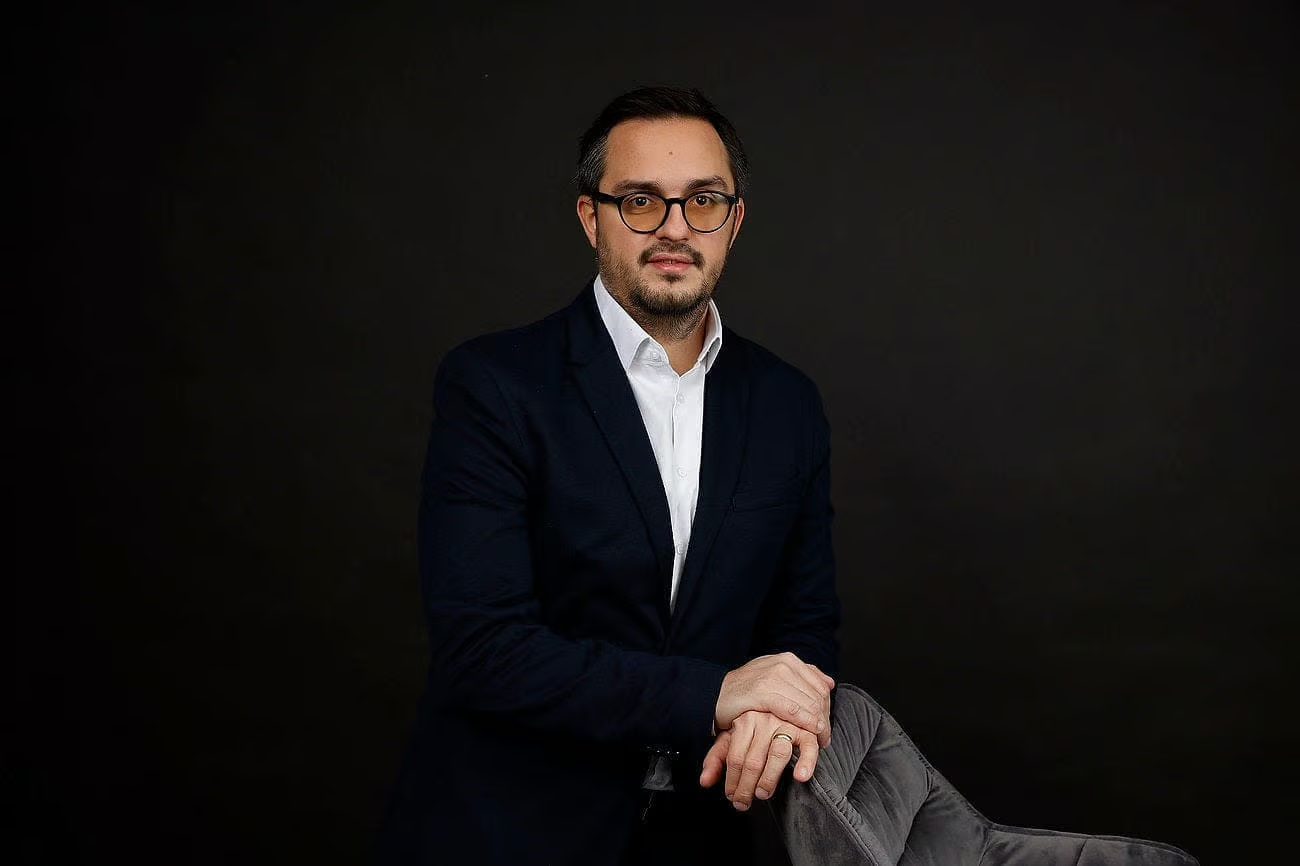
Mini-interview with Claudiu Bolcu, an open and sincere person who, despite having qualifications and years of experience in his field, is passionate about leadership, which he also trains in Leadership Land projects. Let’s get to know him better.
Claudiu holds a doctoral degree in Political Science and is an experienced manager in a multinational company. Throughout his career of over 15 years in various multinational companies and projects, he has developed his leadership and training and coaching facilitator skills in a variety of environments, both in the public and private sectors.
As a trainer and coach, he has successfully led transformation programs for companies throughout Romania. Claudiu holds certification in Prince2 for Project Management, Lean Six Sigma Black Belt certification for Process Management, as well as several other certifications in Leadership and Coaching.
He promotes collaboration and understanding, emphasizing the importance of finding solutions to problems instead of blaming each other.
Claudiu’s main goal is to facilitate the performance of those he works with and help them achieve both their personal and organizational objectives.
B.S.: Hi Claudiu, I would like you to tell me something about yourself, what hobbies you have, what you do in your free time, and if you have a special project that you would like to share with us.
C.B.: Regarding myself, I can say that I am an energetic person who wants things to move and happen. Therefore, I can list sports as my hobbies, which I practice weekly (squash and football). The children (I have a boy and a girl) also take up a lot of my time, but the beautiful part is that both of them are at an age where we do things together. As for a special project, I could say that Leadership Land is one that I am passionate about. It is a project that I believe in and where I find myself in terms of perspective, values, and mission.
B.S.: What do you aim for participants to achieve in the leadership program you support at Leadership Land?
C.B.: First of all, I want them to leave the course with a positive feeling, and that may not say much, but I believe the most enjoyable moments in the training room are those when a participant says, “aha, I haven’t thought about that” or “I haven’t thought about it this way.” Also, when the training session ends and a participant comes to thank you sincerely, you realize that you have truly made a contribution and you know that person has gained something.
B.S.: I understand. Besides practical exercises, what other alternative methods do you use to support the participants of the leadership program?
C.B.: I’m not sure if these are necessarily alternative methods, but I use a lot of concrete examples from organizations I have worked for, from courses I have conducted over time, and the most important thing is, I believe, my own example and experience with similar situations. I have been present in multinational companies for over 15 years, I have about 10 years of management in these organizations, and I can identify quite well with the kind of problems participants face. I share my failures with them, and I always try to convey that they should not give up but keep trying. In short, my alternative method is to offer them alternatives and invite them to always look for these alternatives until they find one that fits. The focus is always on the positive, on the fact that a solution will emerge sooner or later.
B.S.: What feedback have you received from former participants and how have you integrated those suggestions to improve the content and delivery methods of the programs?
C.B.: I think the most important, or at least the first constructive feedback that comes to mind, is to not let everyone talk as much. I thought this was a good thing, you know? I thought as long as a person is speaking, it’s okay and probably good for them. But if there is someone who talks a lot and dominates the conversation, it’s not okay for others. Once I received this feedback, I thought that besides being a person who wants to empathize with others, who wants to make them feel in a safe space, I am also a facilitator who needs to bring out certain things, emphasize them, and take them through a learning process. But when you have a person who dominates the conversation, even if what they say is relevant, at some point, it can hinder the ability of others to find answers to their own situations/problems.
On the other end of the spectrum, I received positive feedback in the early stages of my facilitator career, saying that the program helped not only at work but also at home, in personal life, where it improved the relationship with children. I really liked this feedback, even though it seems trivial because I strongly believe that my role and our mission at Leadership Land is not only to help develop extraordinary leaders but also to cultivate better, more balanced individuals.
B.S.: Thank you very much for your answers.
C.B.: You’re welcome, anytime.